
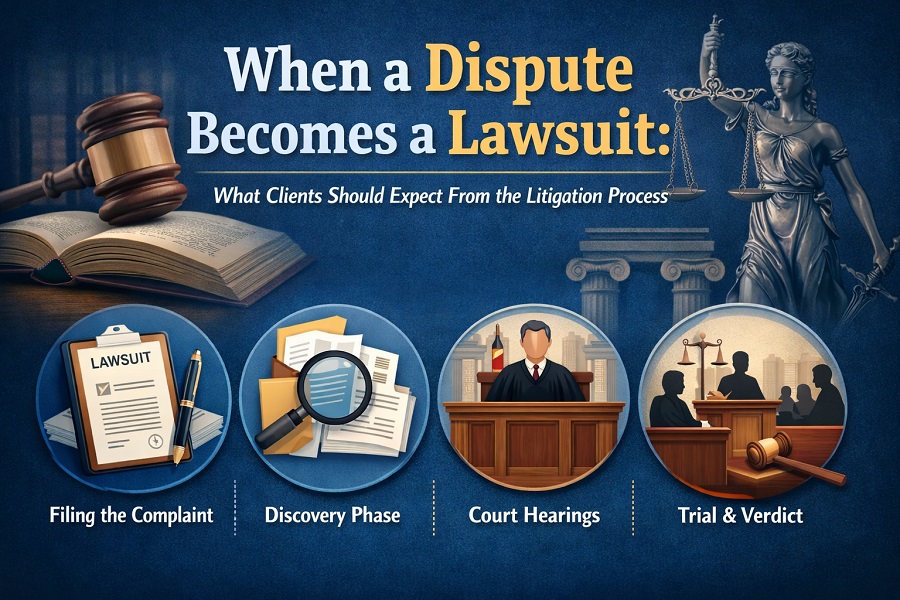
Disagreements are a normal part of life and business. Contracts fall apart, property boundaries are questioned, business partners disagree, and sometimes people simply cannot resolve a conflict on their own. Many disputes are settled through discussion or negotiation, but occasionally the situation reaches a point where a lawsuit becomes necessary.
For individuals and businesses who have never been involved in litigation, the process can feel unfamiliar and intimidating. Understanding what happens during a lawsuit helps reduce uncertainty and allows clients to make informed decisions as the case moves forward.
How a Dispute Turns Into a Lawsuit
A lawsuit usually begins after attempts to resolve a disagreement outside of court have failed. One party believes their rights have been violated or that a legal obligation has not been met. If the parties cannot reach an agreement, the dispute may move into the court system.
The person bringing the claim is called the plaintiff. The party being accused or challenged is called the defendant. The plaintiff files a formal legal document known as a complaint, which explains the facts of the dispute and the legal claims involved. Once the complaint is filed and served, the litigation process officially begins.
The Early Stages of Litigation
After receiving a complaint, the defendant has the opportunity to respond. This response is known as an answer. In the answer the defendant may admit certain facts, deny others, and raise defenses that explain why they believe they should not be held responsible.
At this stage the court may also schedule initial conferences to establish timelines and procedures. Judges often encourage parties to continue discussing settlement options even after a case has been filed. Many disputes still resolve at this early stage when both sides gain a clearer understanding of the strengths and weaknesses of their positions.
The Discovery Process
One of the most important parts of litigation is the discovery phase. Discovery allows both sides to gather information and evidence from each other. The goal is to ensure that each party understands the facts before the case moves toward trial.
Discovery can include written questions called interrogatories, requests for documents, and depositions. A deposition is a formal interview conducted under oath where attorneys question witnesses and parties involved in the dispute.
This stage can take time because it often involves reviewing large amounts of information. However discovery is essential because it helps both sides evaluate the evidence and prepare their legal arguments.
Motions and Legal Arguments
During the course of litigation attorneys may file motions asking the court to make certain decisions before trial. These motions can address procedural issues, requests to dismiss claims, or arguments about the admissibility of evidence.
Motions allow the court to narrow the issues in dispute and sometimes resolve parts of the case without a full trial. Judges review written arguments and may hold hearings where attorneys present their positions.
Strong preparation and careful legal analysis are critical during this stage because the court’s decisions can shape the direction of the entire case.
The Role of Settlement Discussions
Many people assume that once a lawsuit is filed the case will inevitably end in trial. In reality a large number of disputes settle before reaching that stage.
As discovery progresses both sides gain a clearer understanding of the evidence and potential risks. This often leads to renewed settlement discussions. Negotiation, mediation, or other forms of dispute resolution can help the parties reach an agreement that avoids the time and cost of trial.
Settlement does not mean that a claim lacked merit. In many cases it reflects a practical decision that balances risk, expense, and the desire to move forward.
Preparing for Trial
If a case does not settle it may proceed to trial. Preparation for trial involves organizing evidence, identifying witnesses, and developing a clear legal strategy.
Attorneys prepare opening statements, examine witnesses, present documents, and make legal arguments to support their client’s position. The judge or jury evaluates the evidence and ultimately decides the outcome of the case.
Trial is often the most visible part of litigation but it represents only one stage in a longer process that requires careful preparation.
The Importance of Strategy
Litigation is not just about presenting arguments in court. It involves developing a strategy that aligns with the client’s goals and the realities of the dispute.
Some clients want to resolve a matter as quickly as possible. Others need to defend important rights or protect significant business interests. Each situation requires thoughtful evaluation of risks and potential outcomes.
Experienced legal counsel helps clients understand these factors and choose the most effective path forward.
Communication and Client Involvement
Successful litigation depends on strong communication between attorneys and clients. Clients play an important role in providing information, gathering documents, and helping attorneys understand the full context of the dispute.
Clients should also expect regular updates about developments in the case. Litigation can take time and there may be periods where progress appears slow. Clear communication helps ensure that clients remain informed and confident throughout the process.
Managing Expectations
One of the most important aspects of litigation is maintaining realistic expectations. Court proceedings follow structured procedures and timelines. Some steps may take longer than anticipated and outcomes can never be guaranteed.
Preparation and strategic advocacy increase the chances of a favorable result but the legal system involves many variables. Understanding this reality helps clients approach the process with patience and perspective.
The Value of Experienced Legal Advocacy
Having knowledgeable legal representation is essential during litigation. Attorneys who regularly handle disputes understand how courts operate, how evidence is presented, and how legal arguments are evaluated.
They help clients navigate complex procedures while focusing on the most effective strategy for achieving their goals. Firms like Coogan Smith LLP bring years of litigation experience and practical judgment to each case. Their approach emphasizes careful preparation, clear communication, and advocacy that reflects both legal knowledge and real-world experience.
Moving Forward After a Dispute
Litigation can feel overwhelming, especially for those who have never been involved in a lawsuit before. However understanding the process helps remove much of the uncertainty.
Disputes arise in many areas of life and business. With proper preparation, strategic legal guidance, and realistic expectations, the litigation process becomes a structured path toward resolving those conflicts.
Experienced firms such as Coogan Smith LLP help individuals and businesses navigate that path with confidence. Through thoughtful advocacy and careful preparation they work to ensure that clients are informed, prepared, and positioned for the best possible outcome.
In the end litigation is not simply about winning or losing a case. It is about protecting rights, resolving disputes, and helping clients move forward once the conflict has been addressed.
